
Tracing Former Kewaunee County Owners
Every past transfer is one link in the chain. The Register of Deeds posts online real-estate indexes beginning June 18, 1979, along with the Deketo search, Abstract Indexes, Grantor/Grantee Indexes, and a Certified Survey Map index. That covers the modern span of deed records. Earlier deed-book coverage has no published year range, so a quick web result will not settle every historical question. Match the deed's parties to its legal description. That is how one transfer connects to the next.
| Source | Years It Covers | Where Held | What It Shows |
|---|---|---|---|
| Online deed index | From June 18, 1979 | Register of Deeds / Deketo | Recorded instruments and party links; live sample fields were not confirmed. |
| Older books and indexes | Earlier years; exact runs not verified | Register of Deeds counter or archive | Earlier grantor/grantee transfers and deed references. |
| 1903 plat pages and atlas | 1903 snapshot | County Land Information and Wisconsin Historical Society | Historic farm, township, village and lot context, not title. |
| Local history and tax holdings | Exact year ranges not published | Kewaunee County Historical Society and library | Early land, tax, maps, photographs and identity clues. |
For a transfer dated within the indexed period, start online and copy the recording reference. For an earlier owner, call the Register of Deeds before visiting to ask which older books or microfilm cover the year. The county genealogy page requires an appointment and photo ID. For place or family clues, use the Historical Society and the Wisconsin Historical Society atlas, then return to the land record to confirm that the same parcel is involved.
The Deketo real-estate portal is the current online doorway for the later years.
The Deketo deed portal shows where indexed deed research begins.
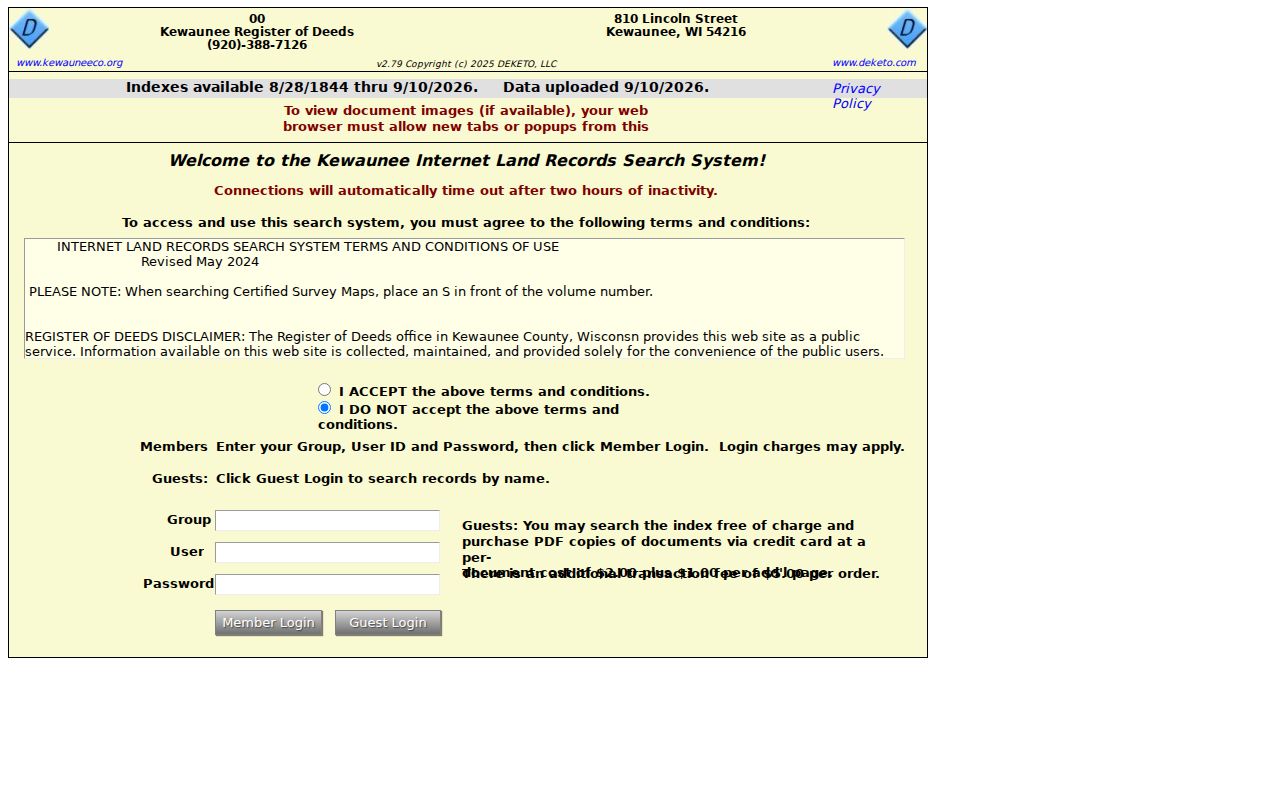
Follow each result by document reference and legal description, not name alone.
Before the 1979 Kewaunee Index
The online cutoff is June 18, 1979. Earlier Kewaunee County transfers may be in original or microfilmed deed books, grantor/grantee volumes and abstract indexes. The Register of Deeds did not publish exact book-by-book runs in the research, and the first deed book or any loss history was not verified. Ask the office for the finding aid and appointment rules using the property description and approximate year rather than requesting every record for a surname.
For in-person genealogy research, the county requires an appointment Monday through Friday, 8:15 a.m. to 4:15 p.m., and valid photo ID. The office points researchers to FamilySearch, the Wisconsin Historical Society, Green Bay Area Research Center and the County Historical Society. Each collection may have different coverage, so record the source and date for every name before extending the chain.
The Register's genealogy instructions explain the county counter route.
The Register's genealogy instructions show the appointment and identification requirements.
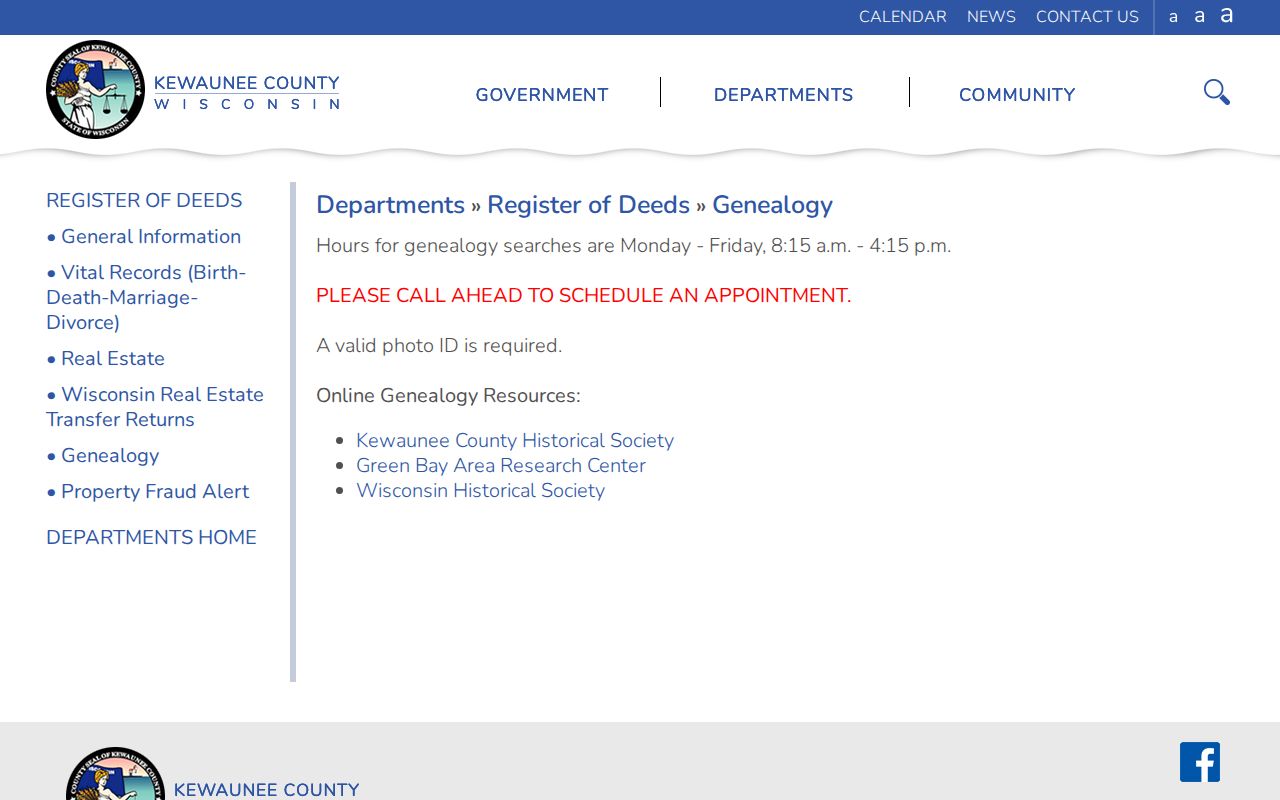
Counter research can take the chain earlier than the online index.
Walking the Kewaunee County Chain Backward
Read the chain one transfer at a time. Take the most recent deed first. The grantee in it becomes the first name you hunt in a reverse search. The prior grantor then turns into the next grantee as you step backward. Kewaunee County's online indexes cover the later part of that sequence. Older volumes demand a different method at the counter. Keep the parcel description beside every name. That way the trail does not drift into a neighbor's chain.
- Find the newest recorded deed and note its grantee, grantor, date and description.
- Search the grantee in the earlier index as a grantor, then identify the deed by land description.
- Use the preceding grantor as the next grantee and repeat backward.
- When the web index ends, ask for the corresponding older book or microfilm volume.
- Grantor
- The party who conveyed the described interest.
- Grantee
- The party who received that interest.
- Chain of title
- The ordered sequence of recorded transfers tied to the same land.
- Legal description
- The recorded land description, which can outlast a street label.
Kewaunee County's 1903 Plat Clues
The county Land Information page links 1903 plat-book pages for its towns, and the Wisconsin Historical Society hosts a digitized Standard Atlas of Kewaunee County. These maps can reveal a former farm owner, township section, old road or village lot that helps locate an earlier deed. They capture a point in time and are not a chain of title, current map or proof of ownership.
Follow a historic owner or legal description into the older grantor/grantee index, then track any later CSM or deed that divided the land. A modern parcel number may not appear on the 1903 page. The digitized county atlas is a useful research lead when an old address is difficult to place.
The Wisconsin Historical Society's scanned atlas gives historic landowner and plat context.
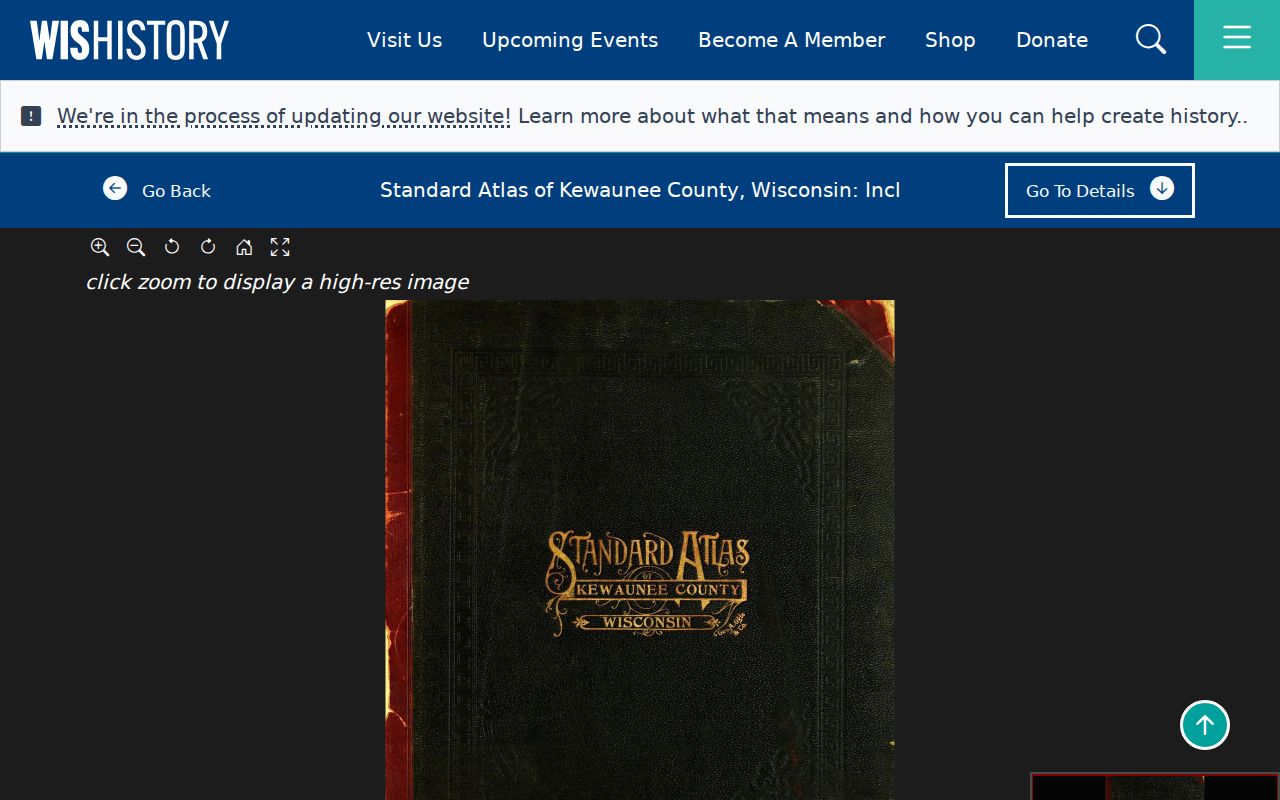
Use names and section lines from the atlas to direct a later deed-book search.
Estate Deeds in a Kewaunee Owner Chain
A chain does not always run through straightforward sales. Some transfers pass through a personal representative or a trustee instead. A death certificate can pin down a date, but it conveys no land. Check the Register of Deeds for a personal-representative deed or similar transfer. Use WCCA and the Register in Probate for the related estate case. A probate inventory, order, or appointment may clarify the fiduciary's authority and the property description. The Clerk of Circuit Court and Register in Probate sit at 613 Dodge Street. That office is separate from the Register of Deeds at 810 Lincoln Street. Court access varies by filing. Sealed or confidential material stays closed to the public. Keep the court file and the recorded deed as separate sources. Match each one to the same legal description.
Kewaunee County History Center Land Files
The County Historical Society reports early land ownership, tax records, maps, vital indexes and thousands of documents, along with more than 20,000 photographs. The History Center at 217 Ellis Street can help bridge the years before the online deed index, especially when an older town or street name needs context. It is open February through December and accepts appointments; regular hours are Thursday and Friday 10 a.m. to 4 p.m. and Saturday 9 a.m. to noon.
The library's Ancestry Library Edition is for in-library use, while HeritageQuest, Historic Newspapers and Recollection Wisconsin add other research paths. Exact city-directory years are not listed, so check with the library before relying on a run. Use directories and newspaper notices to form a name or address lead, then verify the property transfer in the recorder's chain.
The Kewaunee County Historical Society describes its local collections and visit information.
The Kewaunee County Historical Society describes local history collections that can support an older chain search.
Local history is a lead source; recorded instruments remain the title trail.
How Far Kewaunee County Owner Records Reach
The online deed index has a known start date, but earlier coverage is less certain. The first deed-book volume and exact earlier runs remain open questions. So does any courthouse loss or reconstruction history. Kewaunee County was organized in 1852. The City of Kewaunee has served as county seat since then. That history alone cannot tell you which book or microfilm holds a particular transfer. Ask the Register of Deeds or the Historical Society about the oldest available volume and indexes. Do this before concluding a chain has a gap.
Lawful use. Use Kewaunee County former-owner records for property history, estate work or a title review. Do not use a name or address to track, threaten or harass a living person.